
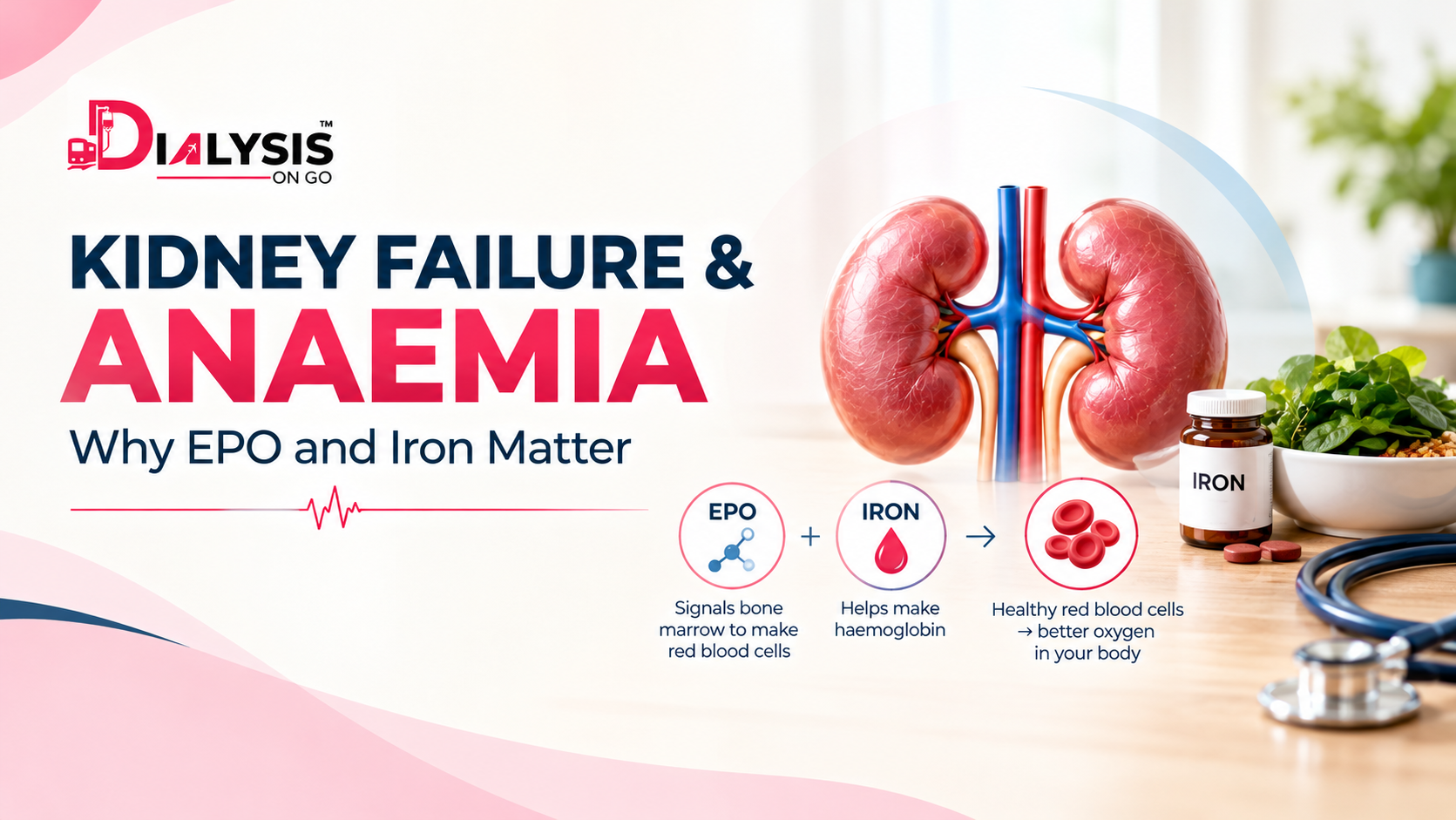
Anaemia is one of the conditions that is extremely common in chronic kidney disease as well as kidney failure. Constant fatigue, weakness, breathlessness or lack of stamina are some of the symptoms that often get overlooked due to these being a normal part of living with kidney disease.
The link between kidney failure and anaemia can be seen through the role the kidneys play in the production of a hormone called erythropoietin (EPO), as well as iron and how this plays a part in kidney disease anaemia.
What Is Anaemia?
It refers to a medical problem wherein there is a shortage of healthy red blood cells within the blood stream.
Haemoglobin refers to a particular protein substance contained in red blood cells. The main task of this substance involves transporting oxygen throughout the entire body. A drop in haemoglobin levels means that your body struggles to get oxygen transported effectively.
Common symptoms of anaemia can include:
• Persistent fatigue or tiredness
• Breathlessness
• Dizziness or light-headedness
• Lack of stamina
• Pale skin
• Lack of concentration
• Feeling excessively tired after doing normal activity
However, these symptoms can be common in people with kidney disease as a number of conditions can cause these symptoms. Blood tests are essential in determining if you have anaemia and its cause.
Why Does Kidney Failure Cause Anaemia?
Healthy kidneys have a number of important roles besides being involved in the removal of waste from the blood. One of these roles is the production of a hormone known as erythropoietin or EPO for short.
When the kidneys are functioning at a significantly reduced capacity, they begin to produce less EPO. This results in the bone marrow receiving less of the signal to produce red blood cells.
However, reduced levels of EPO are just one of the many potential causes of anaemia in kidney disease.
Other causes can include:
• Iron deficiency or reduced availability of iron
• Blood loss during dialysis or blood tests
• Inflammation caused by kidney disease
• A reduced lifespan of red blood cells
• Other nutrient deficiencies or illnesses
It indicates that the anemia among dialysis patients could be caused by multiple factors at once.
What Is EPO And Why Is It Important?
Erythropoietin is also known as EPO. This is mainly synthesized in the kidneys. It performs its tasks by going into the bone marrow and giving orders to produce more red blood cells.
When the kidneys reach a level of significant damage where EPO production begins to decline – this can cause reduced red blood cell production
This is why EPO in kidney disease is an extremely important concept.
Why Is Iron Important In Kidney Disease?
Iron plays a major role in the production of haemoglobin. It is needed in order for the body to produce healthy red blood cells despite having a good level of EPO.
Chronic kidney disease can limit a person’s ability to produce healthy red blood cells due to low levels of iron in the blood. There are multiple potential causes of low iron levels including blood loss, restricted iron intake or availability, inflammation and the effects of continued treatment.
Iron availability is extremely important, as is understanding the difference between stored iron and available iron. A patient with sufficient iron can still have problems with making the iron available for the creation of red blood cells. One of the main reasons why multiple blood tests relating to iron are taken is due to this.
How Are EPO & Iron Connected?
EPO and iron both play a part in the production of red blood cells, however, they both have slightly different roles.
EPO is the signal to tell the bone marrow to produce more red blood cells. Iron is required to make the haemoglobin in the blood cells.
Essentially:
EPO provides the signal. Iron provides the materials needed for the creation of the haemoglobin in red blood cells.
A dialysis patient with reduced iron availability will not be able to benefit from increased red blood cell production sufficiently due to the combination of the two factors.
How Is Anaemia Diagnosed In Kidney Failure?
Anaemia can be diagnosed using a number of blood tests. These tests can give a good insight into possible causes of anaemia as well as the severity of anaemia.
Some of the tests that are commonly used include:
Haemoglobin
Haemoglobin is one of the main readings that will be used to determine if you have anaemia or not.
Ferritin
Ferritin gives a good indication of the amount of stored iron in the body. It is important to understand that this reading is impacted by other conditions such as inflammation so it is used in conjunction with the other readings.
Transferrin Saturation (TSAT)
Transferrin saturation provides insight into how much iron is actually available for bodily use.
The doctors will conduct further tests via bloodwork, evaluate the patient's symptoms, medical background, etc., before moving forward with any recommendations.
How Is Anaemia Treated In Dialysis Patients?
Treatment options will vary depending on the cause and severity of anaemia as well as general health.
Iron therapy
If it is determined that iron deficiency or lack of iron availability is a major contributor to anaemia, then iron therapy might be recommended. Depending on the patient, this can either be given orally or intravenously.
Intravenous iron is commonly used in people who are undergoing haemodialysis if oral iron is not providing sufficient treatment or cannot be given.
Erythropoiesis-Stimulating Agents
Erythropoiesis-stimulating agents (ESAs) are drugs, which are pharmaceuticals designed to emulate the actions of endogenous EPO. ESAs are used to stimulate the production of red blood cells in people with chronic kidney disease.
ESAs might be used if it is determined that reduced levels of naturally occurring EPO is a major contributor to anaemia.
Other treatments
Doctors will also look to treat other potential contributors to anaemia including blood loss, nutritional deficiencies, infection or inflammation.
The aim is not just to increase haemoglobin levels but to look at all contributing factors before treating them.
Why Do Dialysis Patients Need To Monitor Anaemia?
Anaemia treatment is not something that just happens once. There will be fluctuations in levels of haemoglobin and iron availability.
Among individuals receiving haemodialysis, routine blood tests are necessary to monitor the effectiveness of treatment, since symptoms such as fatigue may take some time to appear. These may not be attributed immediately to a particular source. Symptoms will come on slowly.
Can Dialysis Patients Travel During The Holidays?
Having kidney failure or being on regular dialysis does not necessarily mean that you cannot enjoy all your favourite trips and holidays. Yes, while travelling on dialysis, it does require patients to arrange their treatment according to their destination and travel schedule.
Anyone wanting to visit somewhere which requires dialysis should take into consideration the timing of your treatments, location, dialysis services located at the destination you are going to, any paperwork pertaining to health conditions, medications required and any other requirements before embarking on the journey. Patients should also consider dialysis while travelling and make sure where their next treatment is going to take place before leaving home.
Those thinking about traveling elsewhere but without having access to dialysis on a daily basis may need to schedule a session ahead of time to make sure that none of their treatment slots are missed. This is particularly important when arranging a dialysis appointment in another city, as treatment availability may vary between destinations.
Holiday dialysis in India can be planned around a patient’s destination and treatment schedule rather than leaving dialysis treatment until the last minute.
With a little bit of planning, it is possible to travel and have dialysis without it disrupting your plans.
Frequently Asked Questions
Why does kidney failure cause anaemia?
Kidney failure can reduce the production of EPO – the hormone that stimulates the production of red blood cells – and can cause iron deficiency, inflammation and blood loss.
Why do kidney patients need EPO?
When your damaged kidneys are unable to produce enough natural EPO, you might need medication to stimulate the production of red blood cells. This medication works in a similar way to natural EPO.
Do all dialysis patients need iron?
Not everyone undergoing dialysis needs iron therapy. Whether or not iron therapy is necessary depends on factors such as iron availability, hemoglobin levels, past treatment experiences, and overall physical condition.
What blood tests are used to monitor anaemia?
Haemoglobin, ferritin and transferrin saturation are the main readings when it comes to monitoring anaemia, alongside other blood tests as required.
Can dialysis patients travel during a holiday?
Yes, dialysis patients can travel as long as all necessary arrangements are made in order to ensure that dialysis treatment is not interrupted.
Conclusion
The anaemia associated with kidney disease cannot be reduced simply to low levels of haemoglobin in the bloodstream. There may be multiple factors at work including decreased production of EPO, insufficient iron, inflammation, and blood loss from dialysis procedures. An appreciation for how EPO relates to iron and red blood cell production will aid comprehension of blood tests and treatments for anaemia.
For those of you who are thinking of taking a holiday, it is important to ensure that dialysis is still carried out as normal. A holiday dialysis platform in India can help to make this a possibility as treatment can be scheduled around your destination and treatment schedule rather than waiting until you are ready to leave.
DialysisOnGo can help you to find dialysis treatment when you need it including when you are away from home or visiting another city.
.webp)
.webp)
.webp)
प्रतिक्रिया
प्रतिक्रिया द्या